

Whether you're running a small business in Canada, traveling between provinces, or just trying to understand your receipt, Canada's GST/HST system can be confusing. The rate varies by province, the place-of-supply rules determine which rate applies, and some goods and services are exempt or zero-rated. This guide is your definitive reference for every Canadian province's 2026 GST/HST rate, how to calculate it in both directions (adding and removing), and the key rules you need to know as a business owner or consumer.
Canada GST/HST/PST Rates 2026. Quick Reference
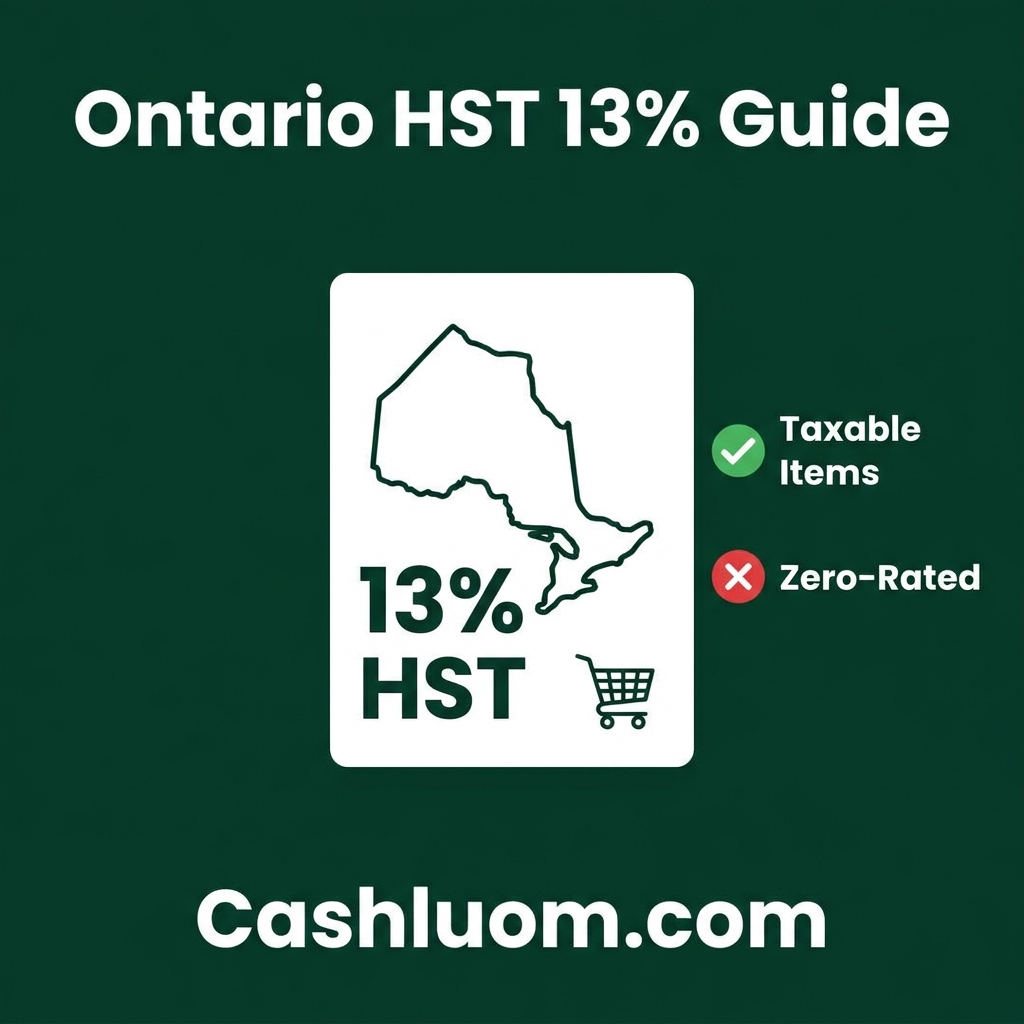
Lowest: 5% (Alberta) | Highest: 15% (Atlantic Canada) | Ontario: 13%
Federal GST is 5% nationwide. HST provinces combine federal and provincial into one rate. GST + PST provinces charge both separately. Quebec charges GST + QST (combined effective 14.975%).
Canada Tax Rates by Province 2026
| Province/Territory | Tax Type | Federal (GST) | Provincial | Total Rate | Add Tax: Multiply Net By | Remove Tax: Divide Total By |
|---|---|---|---|---|---|---|
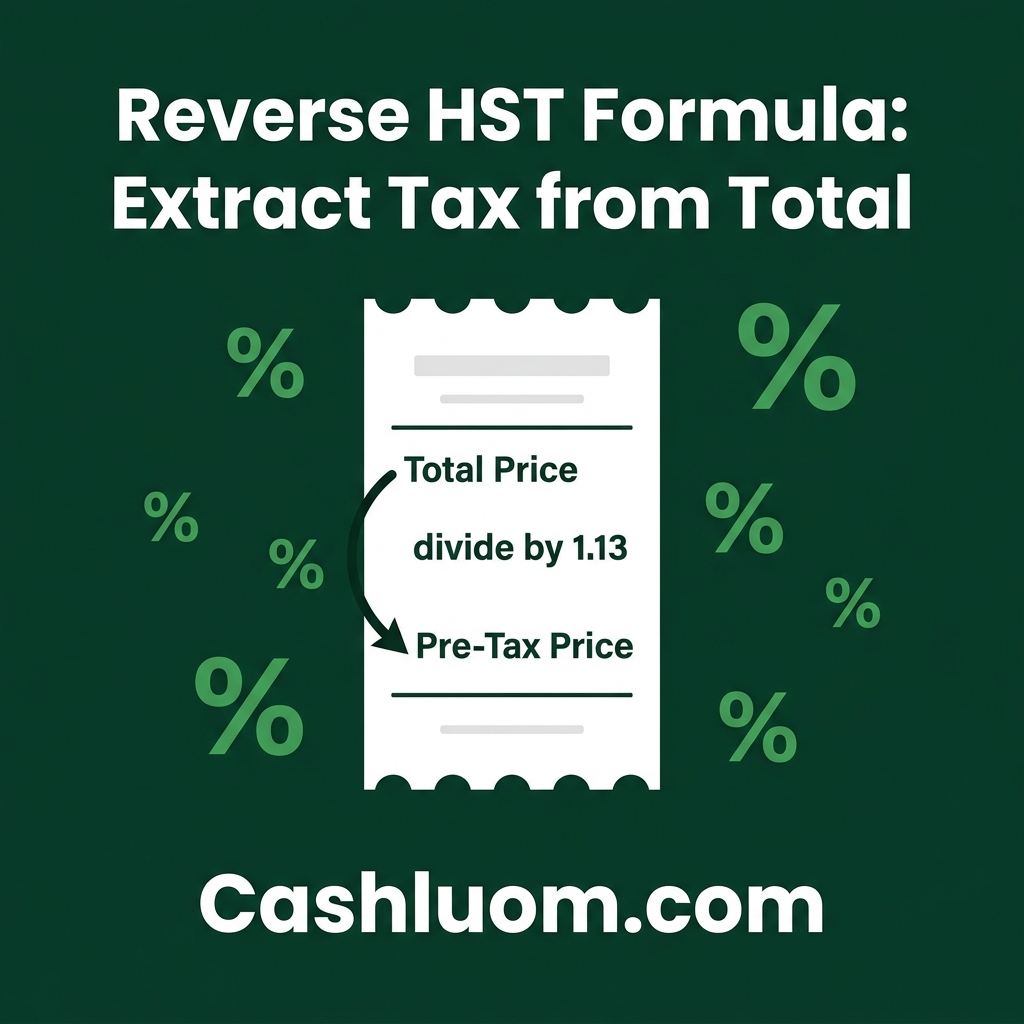
| Ontario | HST | 5% | 8% | 13% | 1.13 | 1.13 |
| Nova Scotia | HST | 5% | 10% | 15% | 1.15 | 1.15 |
| New Brunswick | HST | 5% | 10% | 15% | 1.15 | 1.15 |
| PEI | HST | 5% | 10% | 15% | 1.15 | 1.15 |
| Newfoundland | HST | 5% | 10% | 15% | 1.15 | 1.15 |
| BC | GST + PST | 5% | 7% PST | 12% | 1.12 (combined) | 1.12 (combined) |
| Alberta | GST only | 5% | 0% | 5% | 1.05 | 1.05 |
| Saskatchewan | GST + PST | 5% | 6% PST | 11% | 1.11 | 1.11 |
| Manitoba | GST + RST | 5% | 7% RST | 12% | 1.12 | 1.12 |
| Quebec | GST + QST | 5% | 9.975% QST | 14.975% | 1.14975 | 1.14975 |
| Yukon / NWT / Nunavut | GST only | 5% | 0% | 5% | 1.05 | 1.05 |
⚠️ 2026 rates. HST rates have been stable for several years. Verify provincial PST/QST rates as they may be adjusted by provincial budgets. Source: CRA. General Information for GST/HST Registrants.
How to Calculate GST/HST (Adding Tax)
To add GST/HST to a net price: multiply the net price by (1 + tax rate as decimal).
| Province | Net Price | Formula | Tax Amount | Total Price |
|---|---|---|---|---|
| Ontario (13%) | $500 | $500 × 1.13 | $65.00 | $565.00 |
| Alberta (5%) | $500 | $500 × 1.05 | $25.00 | $525.00 |
| NS/NB/PEI/NL (15%) | $500 | $500 × 1.15 | $75.00 | $575.00 |
| BC (12%) | $500 | $500 × 1.12 | $60.00 | $560.00 |
| Quebec (14.975%) | $500 | $500 × 1.14975 | $74.88 | $574.88 |
GST/HST Registration Threshold
You must register for GST/HST when your taxable sales exceed $30,000 in a single calendar quarter or in four consecutive calendar quarters. Once registered, you must collect and remit GST/HST on all taxable sales and can claim ITCs on business purchases. Small suppliers under $30,000 can register voluntarily: beneficial if you have significant HST-taxable expenses, since registration allows ITC claims even before mandatory registration.
Note that public service bodies (charities, non-profits, municipalities) have a higher threshold of $50,000. Taxis, ridesharing (Uber, Lyft), and short-term accommodation rental businesses (Airbnb) must register for GST/HST regardless of revenue level.
Place of Supply: Which Province's Rate Applies?
When you sell goods or services across provincial borders, the rate depends on the "place of supply": where the supply is considered to have been made. General rules:
- Tangible goods: Rate depends on where the goods are delivered to the customer
- Services: Generally taxed at the rate of the province where the service is performed
- Real property: Rate depends on where the property is located
- Digital products and online services: Generally based on the customer's location
Frequently Asked Questions
What is the GST/HST rate in Canada in 2026?
Federal GST is 5% across all of Canada. In HST provinces (Ontario 13%, Nova Scotia/NB/PEI/NL 15%), the provincial portion is combined with GST into a single rate. In BC, Manitoba, and Saskatchewan, 5% GST applies plus a separate provincial sales tax (7%, 7%, and 6% respectively). Quebec charges 5% GST + 9.975% QST. Alberta and the territories charge 5% GST only.
Do I charge GST or HST to customers in other provinces?
You charge the rate applicable to the province where the goods are delivered or the service is performed. If you're in Ontario (13% HST) but delivering goods to a customer in Alberta, you charge 5% GST (Alberta's rate). Your GST registration and remittance to the CRA still apply: you just remit at the appropriate provincial rate based on where each supply was made. This is the "place of supply" rule.
When must a small business register for GST/HST?
You must register when taxable revenues exceed $30,000 in any single calendar quarter, or in the previous four consecutive calendar quarters combined. You have 29 days from the day you exceed the threshold to register. Voluntary registration below $30,000 is allowed and beneficial if you have significant GST-taxable business expenses you want to recover as ITCs.
What is the difference between zero-rated and exempt supplies in Canada?
Zero-rated supplies (like basic groceries, prescription drugs, exports) have a 0% GST/HST rate but are still "taxable supplies": businesses can claim ITCs on costs related to making these supplies. Exempt supplies (like most health services, educational services, financial services, residential rent) don't attract GST/HST and ITCs cannot be claimed on related costs. Zero-rated is better for business cash flow than exempt because ITC recovery is available.
How often do I need to file a GST/HST return?
Filing frequency depends on annual taxable revenues: over $6 million: monthly; $1.5 million to $6 million: quarterly; under $1.5 million: annually. You can also request more frequent filings if it benefits your cash flow (e.g., to receive frequent ITC refunds). Annually filing small businesses must still remit in installments if they had a refund in the prior year. Returns are filed online through CRA My Account or by mail.
Final Thoughts
Canada's GST/HST system is designed to be a value-added tax that businesses collect and remit: net of the ITCs they've earned on their own purchases. For consumers, knowing the rate in each province helps you budget accurately. For businesses, understanding place of supply, registration thresholds, and ITC rules is essential for compliance. Use the Canada GST/HST Calculator for instant calculations in any province, and explore our HST for Small Business guide for a complete walkthrough of registration, filing, and ITC optimization.
Sources & Citations: Content verified against official guidelines from the IRS (US), HMRC (UK), and ATO (AU). Information is reviewed for accuracy prior to publication.
Free Calculator
Reverse Tax Calculator
Calculate the original pre-tax price from any price-inclusive total. This tool is essential for business owners and shoppers who need to back out sales tax, VAT, or GST. Supports all 50 US states, UK VAT (20%), Australia GST (10%), Canada GST/HST (all provinces), and custom tax rates for any country worldwide.
Comments are coming soon. Have feedback? Contact us.